Rule No. 2: Treat yourself like someone you are responsible for helping.
Like me, do you ever find yourself avoiding something you know is good for you? It could be anything. Water, a good night’s sleep or even the gym. And most of the time we explain it away. And the reasons we give make sense. Enough sense to make it okay.
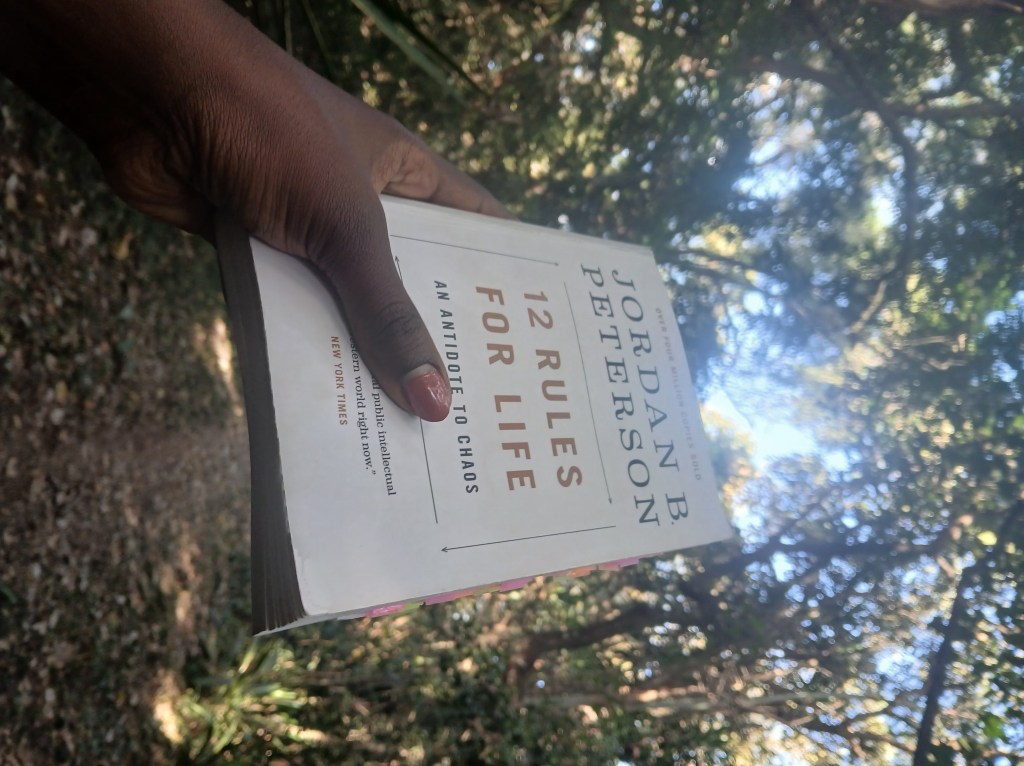
The example in Chapter 2 of 12 Rules for Life hits painfully close to home. I am a repeat offender when it comes to abandoning medical prescriptions. And I am not alone – statistically, more of us drop the ball o our medication than those who finish it. And like I mentioned earlier, the excuses always felt sensible to me: I feel better now. I skipped a day, so the antibiotic streak is ruined anyway. I simply forget.
See? All sensible reasons.
Surprisingly, though, we would be willing to go through absolute hell to ensure that somebody else- a child, partner, friend, parent, or even a pet- doesn’t miss theirs. We’d get mad at a partner for not taking their meds, write notes for our child to carry to school, and call the teacher to make sure they swallow the pill.
For the child, we could say they are dependent on us and we should make the best decisions for them. Maybe that goes for the pet, too. But what about for adults just like us?
What is it that makes you want to follow up on somebody else- to ensure they are doing the things that are good for them – but it becomes a massive problem when it comes to you?
Sure, love your neighbour as you love yourself. Or live your life in service to others. All those many injunctions to treat other people well that we have somehow quietly taken to mean: treat other people infinitely better than you treat yourself.
Strangely enough, it is somehow easier to do that. And the idea brought forth in this chapter is that it’s because we know ourselves.
You are most familiar with your weaknesses, your failures, your worthlessness, and your capacity for evil. Sure, you are exposed to other people’s extent of wickedness, but none of that comes close to the much you know about yourself. You’re conscious of yourself. And that might make you feel like you do not deserve the care you are expected to give yourself.
Is this why we have to be reminded over and over of the importance of self-care? Of the many mantras and affirmations to remind us of our worth? Shouldn’t we just know?
Yet, that seems to be the problem. We do know.
Our deepest secrets. Our greatest shortcomings. We know just how far we can go, even if it’s not known to anybody else. And that, coupled with the existential guilt of life that burdens us, makes it harder to take care of ourselves. To give ourselves the grace and compassion we so willingly extend to other people.
But if other people deserve respect, don’t you? If other people deserve care and compassion, why would you exclude yourself? If the people around you are deserving of the love you so freely give, don’t you think you deserve some, too?
Sure, you may be terrible. But they could be, too. Everyone is deeply flawed. Why then would you love them, and despise yourself?
“We deserve some respect. You deserve some respect. You are important to other people, as much as to yourself. You have some vital role to play in the unfolding destiny of the world. You are, therefore, morally obliged to take care of yourself.”
This does not mean you go around doing only the things that make you happy. It means doing the things that are right for you. It means envisioning a future that would be good for you and taking steps every day toward its attainment. It means knowing who you are and where you are, and doing all the things necessary to get you to where you want to go.
To treat yourself as if you were someone you were responsible for helping.




Leave a Reply